
Unlocking Futures: The Skill-First Revolution Reshaping South Africa's Education Landscape
Explore why practical skills from TVET colleges are increasingly vital for South Africa's youth, offering direct pathways to employment and addressing the national skills gap.
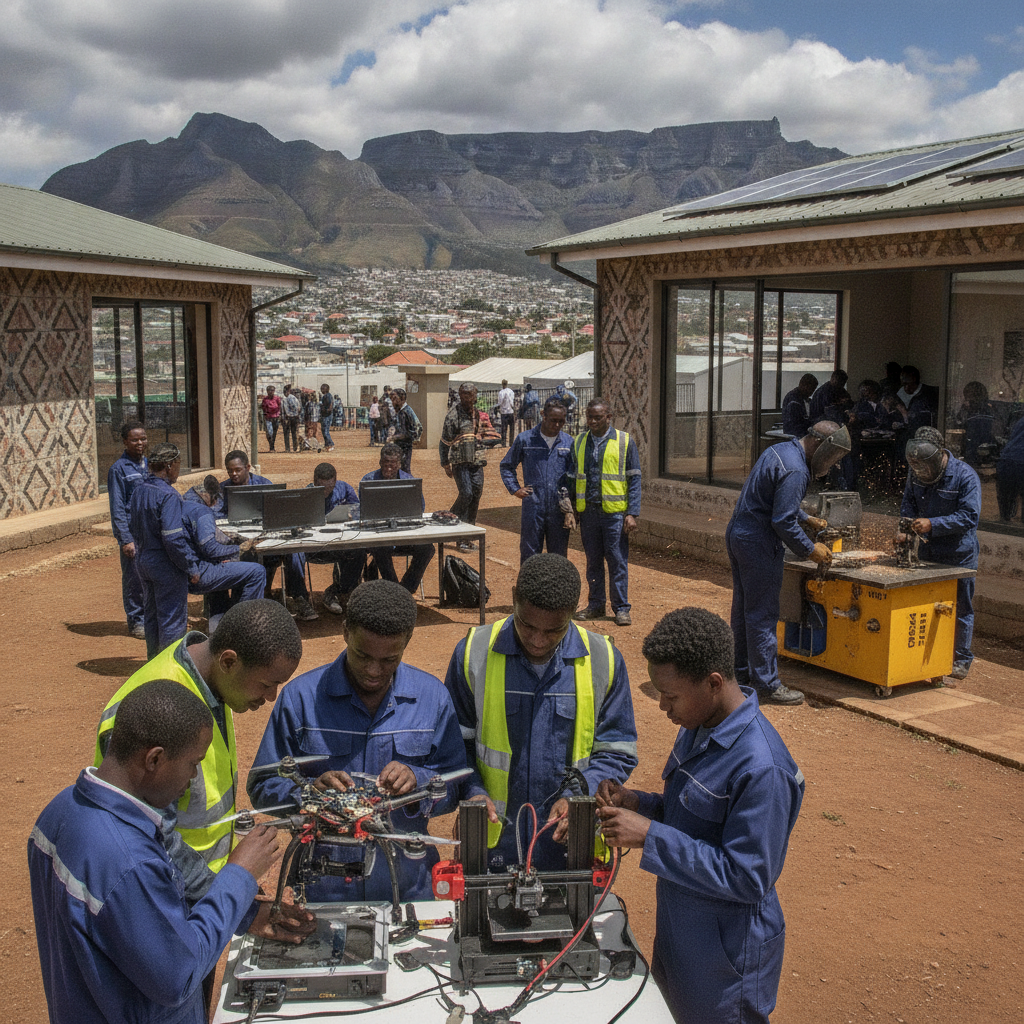
South Africa grapples with persistent youth unemployment, a challenge that demands innovative and pragmatic solutions. While university degrees have long been perceived as the ultimate ticket to success, a quiet revolution is gaining momentum, spotlighting the critical role of practical skills and vocational training in securing sustainable livelihoods for the nation's young population. The traditional dichotomy between academic and vocational pathways is dissolving, making way for a blended approach where relevant skills take centre stage.
Beyond the Degree: The Evolving Job Market
For generations, a university degree represented the pinnacle of educational achievement, often seen as the only credible route to a fulfilling career. While traditional higher education remains vital for certain professions, research, and critical thinking development, it often leads graduates into a highly competitive job market where specific technical abilities and immediate experience are increasingly prized. Many university qualifications, though academically rigorous, don't directly equip students with the immediate, job-ready skills demanded by industries facing rapid technological change and evolving economic realities.
TVET Colleges: A Practical Pathway to Prosperity
Technical and Vocational Education and Training (TVET) colleges offer an alternative, often more direct, and highly effective route to employment. These institutions specialise in hands-on training across a vast array of fields, from engineering and information technology to hospitality, healthcare, and artisan trades. Their curricula are frequently developed in close collaboration with industry partners, ensuring that graduates possess the precise competencies employers are actively seeking. This practical, competency-based approach significantly shortens the gap between learning and earning, providing tangible skills that are immediately applicable in the workforce.
Bridging South Africa's Skills Gap
South Africa's economy suffers from a significant skills mismatch. Industries across various sectors consistently report difficulty in finding qualified artisans, technicians, and specialized workers who can contribute effectively from day one. TVET colleges are uniquely positioned to address this critical gap by producing graduates with in-demand technical expertise. Furthermore, vocational training often fosters an entrepreneurial spirit, equipping young people with the skills to start their own businesses, thereby supporting the growth of small to medium-sized enterprises (SMEs) — a crucial engine for job creation and economic diversification.
The South Africa / Africa Angle
For South Africa, this debate isn't merely academic; it's a profound socio-economic imperative. With alarmingly high rates of youth unemployment, empowering young people with relevant, employable skills is paramount to national stability and progress. Institutions like NSFAS play a crucial role in making both university and TVET education accessible, but the focus must increasingly shift towards ensuring that this investment translates into tangible job opportunities and meaningful economic participation. Government policies and private sector partnerships are increasingly recognising the invaluable contribution of vocational training as a powerful tool for economic inclusion and poverty reduction. Across the broader African continent, similar trends are emerging, with nations prioritising skills development to build resilient economies, foster industrialisation, and create a self-sufficient workforce capable of driving innovation. This re-evaluation of educational pathways aligns perfectly with South Africa's National Development Plan and global sustainable development goals, advocating for an education system that truly serves the needs of its people and its economy.
Source: Google News · SA education